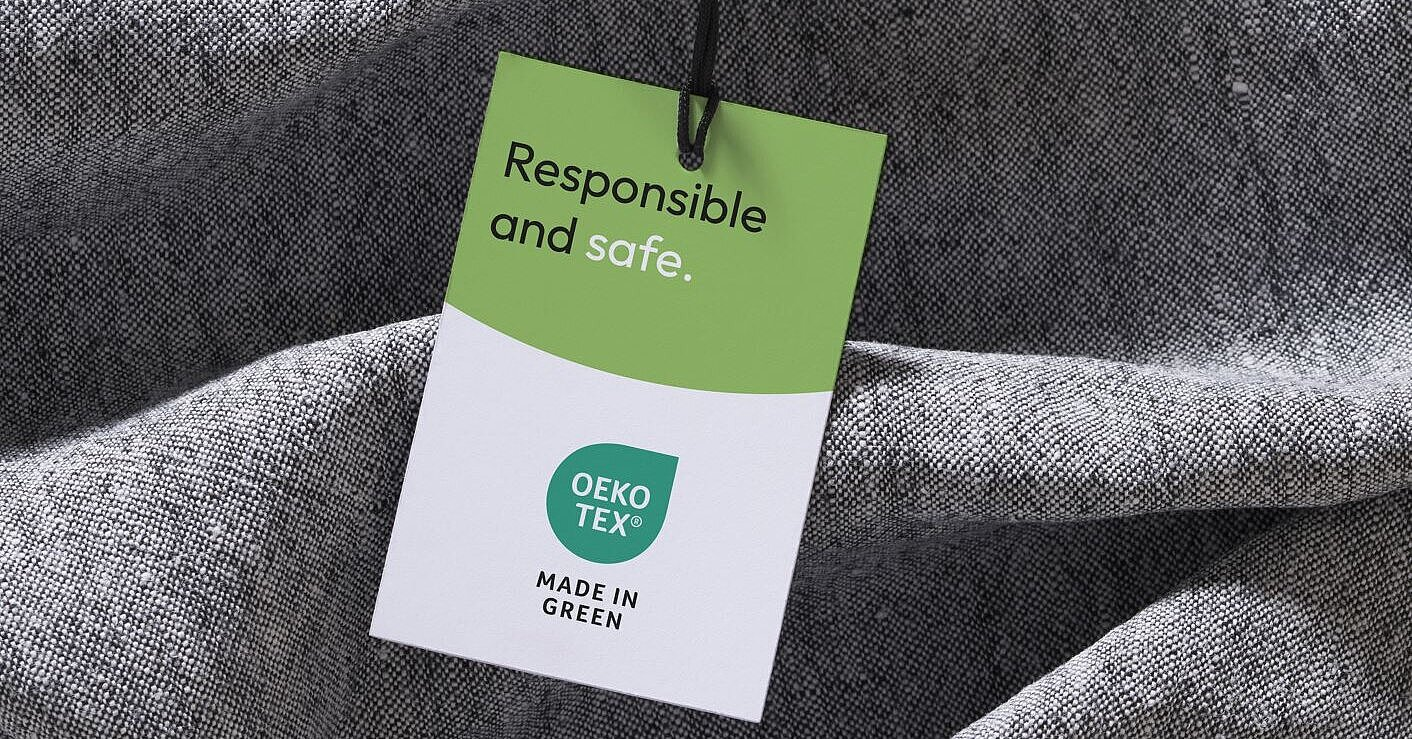
You spot an Oeko-Tex hang tag on a pair of joggers. The price is premium. The tag says “tested for harmful substances.” You wonder: does this tag prove anything at all? Many brands sell oeko tex certified clothing with loose claims. This guide shows you how to verify a real certificate. You’ll learn what the labels actually verify and how brands misuse the name.
How to Verify an Oeko-Tex Label in 4 Steps
1. Find the label on the product or packaging
An actual Oeko-Tex label appears on the garment or its packaging. It states the certification type (Standard 100 or Made in Green) and a certificate number. A generic claim without a number is a red flag.
2. Locate the certificate number
Every valid certificate has a unique number. It looks like “20.HCN.12345” or “CQ 1234/ABC.” Write it down. Do not trust a hang tag that omits this code. You can apply the same check for your men’s organic cotton underwear or any other certified apparel.
3. Check the number in the Oeko-Tex public database
Visit the Oeko-Tex label check tool online. Enter the certificate number. The database confirms if the certificate is active, suspended, or expired. This step takes under a minute. It exposes fake or lapsed claims immediately.
4. Confirm the product class matches what you are buying
Oeko-Tex assigns product classes (I through IV) based on how close the textile touches skin. Class I covers items for babies. Class II covers garments with direct skin contact. If you see a Class III (decoration) certificate used for t-shirts, the claim is invalid. Verify the class fits the product.
4 Ways Brands Misuse the Oeko-Tex Name
They cite a certified mill but not a certified finished product.
A textile mill may hold a Standard 100 certificate for raw fabric. That does not mean the final cut-and-sewn garment meets the standard. A brand promoting organic cotton boxer briefs might only test the thread. Look for a finished-product certificate number.
They use a lapsed or non-public certificate.
Some brands display a certificate number that expired. Others reference a certificate you cannot verify in the public database. Real oeko tex standard 100 labels always point to a live, searchable record.
They imply “tested” means “chemical-free.”
Oeko-Tex tests for hundreds of harmful substances. It does not verify zero chemicals. Marketing often stretches this into “completely chemical-free.” A genuine certificate confirms the item passed safety limits for regulated substances, nothing more.
They label a whole collection when only one item passed.
A single certified beanie may carry the logo. The brand may then apply similar tags to uncertified joggers, hoodies, or tees. Only the item with the exact certificate number is verified. You can check each product’s number yourself, just as you would for men’s organic cotton underwear or any non-toxic activewear.
Standard 100 vs. Made in Green: What Each Label Verifies
| What is Verified | Oeko-Tex Standard 100 | Oeko-Tex Made in Green |
|---|---|---|
| Harmful substances tested in the finished textile | Yes | Yes |
| Environmentally responsible production | No | Yes |
| Socially responsible working conditions | No | Yes |
| Supply chain traceability via a unique product ID | No | Yes |
A Standard 100 label confirms the garment is non-toxic. Made in Green adds ecological and ethical checks. Both labels require periodic re-certification. If you wear non-toxic activewear close to your skin, Standard 100 marks the minimum barrier. Made in Green signals a broader commitment. Neither label equals organic fiber certification, which starts at the farm level.
Frequently Asked Questions
Can a brand claim its clothing is Oeko-Tex certified if only the fabric is?
No. A full-product certificate must exist for the specific garment. Fabric-level certificates do not cover dyes, trims, or sewing threads. Opok verifies every finished garment, not just the raw cotton.
What happens if a certificate expires?
The product is no longer certified. Brands must re-test and re-certify to maintain the label. A lapsed certificate means the claim is void.
Does an Oeko-Tex label cover organic cotton?
No. Oeko-Tex tests for harmful substances. It does not verify organic farming practices. GOTS certification confirms organic status from farm to finished product.
Can I trust a claim without a certificate number?
No. A missing or hidden certificate number is a major warning sign. You should always verify the number in the public Oeko-Tex database.
The Checklist Every Certified Clothing Claim Must Pass
Before you trust any “certified” clothing claim, look for these proof points:
- A finished-product certificate number you can verify in the public database.
- An active, non-expired Oeko-Tex certificate for that exact product.
- The product class matches skin-contact requirements (Class I or II for most apparel).
- The cotton is GOTS-certified organic from farm level to finished fabric.
- Full Tier 1 supply chain traceability is published and current.
- Independent reviews and reputable press detail the product’s safety and authenticity.
Shoppers who skip these checks risk overpaying for labels that mean nothing. Certifications you cannot verify are just marketing phrases on a hang tag. The difference between a traceable certificate and a loose claim is the difference between a product you can trust and one you cannot.
More customers now compare certificate numbers before buying. They look up supply chains. They read third-party verification. Settling for less means buying items that do not meet the standard you thought you paid for. The market is moving toward full transparency. Failing to insist on proof leaves you behind.
Demand verification in every piece you own. Clothing that touches your skin should meet a standard you can confirm in seconds. If a brand cannot back its claim with a live certificate, walk away.
Verify the label. Validate the number. Own only what earns your trust.